19/11/2025
Xinsteel Group Successfully Delivered 76.2mm AR500D Wear-Resistant Steel
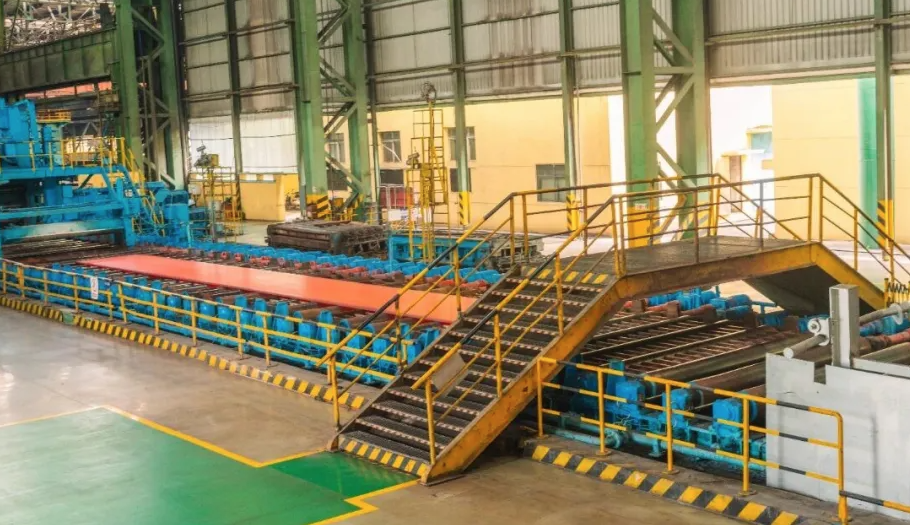
Recently, AR500D wear-resistant steel has achieved mass production with a thickness of 76.2 mm for the first time, significantly expanding the production thickness range of corresponding products.
Read More
17/02/2025
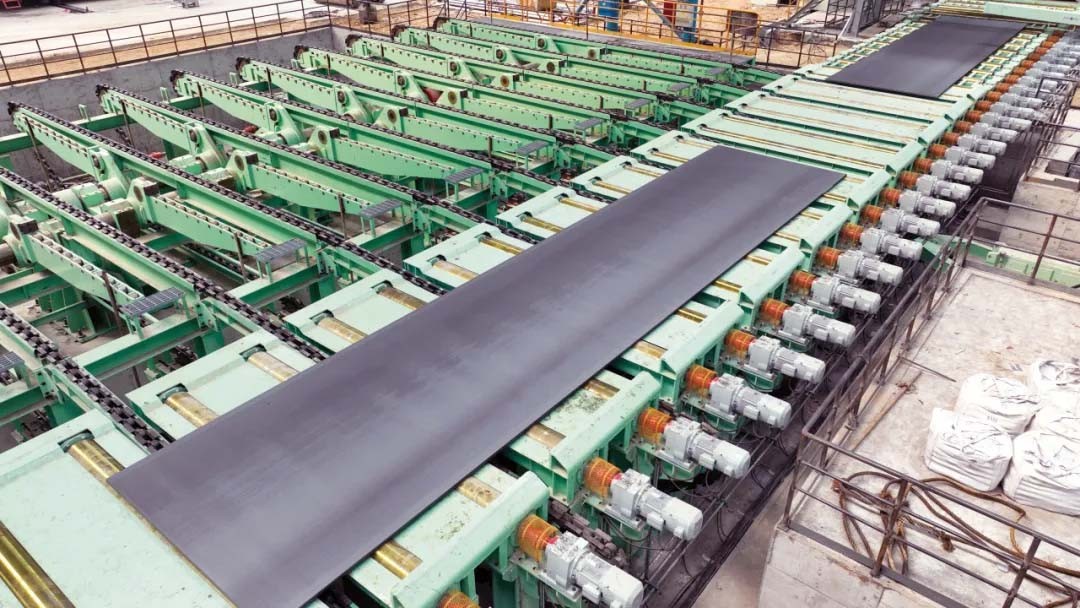
The First Heat-Treated Plate of the 3800mm Wide Thick Plate Heat Treatment Line was Successfully Produced.
The first heat-treated plate of the 3800mm wide thick plate heat treatment line of the Guangxi Iron and Steel hot rolling general plant was successfully produced.

Hello, thank you very much for your question. Factory audits are a very important and wise consideration in international procurement.CSMC's third-party oversight service fully includes the core element of "factory inspection," and this is one of our key services in helping global buyers mitigate risks and verify the strength of suppliers.Regarding your need to understand the true strength of a steel mill in Hebei, our third-party oversight service can provide you with professional assurance from the following aspects:We will dispatch an experienced professional factory inspection team to the steel mill you designate. They will conduct on-site inspections of the plant's scale, production equipment (such as the quantity and brand of blast furnaces, converters, and rolling lines), compliance of environmental protection facilities, and assess the actual operating rate and capacity. This effectively avoids encountering shell companies or unqualified intermediaries.At the same time, we will verify the authenticity of the steel mill's business license, invoicing qualifications, ISO quality system certification, export license, and other complete qualification documents on-site to ensure that it is a legitimate factory with legal operating and export capabilities.We will also assess their technical capabilities, including whether they can produce the specific specifications you require (such as high-strength steel or special-sized plates), the completeness of their quality control processes, and the adequacy of their laboratory equipment, to comprehensively determine whether they possess the technical strength to meet your order.After the factory audit, we will provide you with a document containing photos, videos, and a written assessment to provide the most objective basis for your purchasing decision.Our oversight service is independent of both the buyer and seller. Our factory audit standards and reports are solely responsible to the buyer, ensuring objective and impartial information.
If needed, you can click on the manual contact window to tell us your detailed requirements. Our oversight team will develop a professional factory audit plan based on your needs and provide you with services.
DX51D+Z is a common galvanized sheet with a low-carbon steel base material. A zinc-iron alloy layer is formed on the surface through a hot-dip galvanizing process, resulting in good corrosion resistance and processing performance. This material is mainly used in industrial and civilian applications requiring rust prevention.Physical Properties: Hot-dip galvanized DX51D+Z material has high strength and hardness, enabling it to maintain stability and durability under heavy loads and complex working environments. Its good ductility and toughness also allow it to easily handle various deformation requirements during processing, meeting diverse design needs.Chemical Properties: The surface of hot-dip galvanized DX51D+Z material is covered with a dense zinc layer, which effectively isolates oxygen and moisture, preventing corrosion of the metal substrate. Simultaneously, the zinc layer itself has good electrochemical properties, resisting electrochemical corrosion to a certain extent. This corrosion resistance allows hot-dip galvanized DX51D+Z material to maintain a long and stable service life under harsh conditions such as outdoor, humid, and marine environments.Hot-dip galvanized DX51D+Z material can be joined using various welding methods, and its surface can also be coated to further improve its corrosion resistance and aesthetics. These characteristics have led to the widespread application of hot-dip galvanized DX51D+Z material in construction, bridges, vehicles, ships, and other fields.
There are three main types of wire drawing processes:1. Straight-line wire drawing: This refers to creating straight lines on the surface of an aluminum plate using mechanical friction. It serves the dual purpose of removing scratches and decorating the surface. Straight-line wire drawing can be continuous or discontinuous. Discontinuous lines are generally produced using a brushing or texturing machine. The principle involves two sets of differentially rotating rollers in the same direction. The upper set is a rapidly rotating grinding roller, and the lower set is a slowly rotating rubber roller. The aluminum or aluminum alloy plate passes between these rollers, resulting in fine, discontinuous straight lines. The metal surface exhibits uniform straight lines, giving a simple and modern feel.2. Random-line wire drawing: This is achieved by using a high-speed rotating copper wire brush to rub the metal back and forth and side to side, resulting in an irregular, matte finish with no obvious lines. This process requires a high-quality metal surface.3. Circular-line wire drawing: This uses a circular trajectory for grinding, forming arc-shaped lines that create a flowing effect on the metal surface.
Brushing is essentially a repair process. For example, if a metal surface has scratches, a brushing machine can be used to create uniform scratches, thus concealing the original scratches. Therefore, brushing serves both to remove scratches and to enhance the appearance of metal sheets.Straight-line brushing: The surface displays straight lines, divided into continuous and discontinuous brushing. Continuous brushing is achieved by rubbing in a single direction with a scouring pad or stainless steel brush; discontinuous brushing is processed using a differential roller set (high-speed grinding roller + slow rubber roller).Random-line brushing (also known as "he-wen"): Irregular, matte finish, formed by irregular oscillating friction of a high-speed copper wire brush, this kind of processing has higher requirements on the surface of aluminum or aluminum alloy plates.Wave brushing: Creates a wavy texture, typically achieved on a brushing or texturing machine through the axial movement. A wavy pattern is created by grinding rollers using the axial movement of the upper set of rollers to brush the surface of an aluminum or aluminum alloy plate.Swirl pattern (or "swirl polish"): This technique uses cylindrical felt or nylon wheels with polishing paste for rotary polishing and is often used for decorating small items such as round signs and dials.
China Steel Market
Empowering small and medium-scale steel purchasing
Hot search words:
China Rebar prices China Wire Rod Prices